
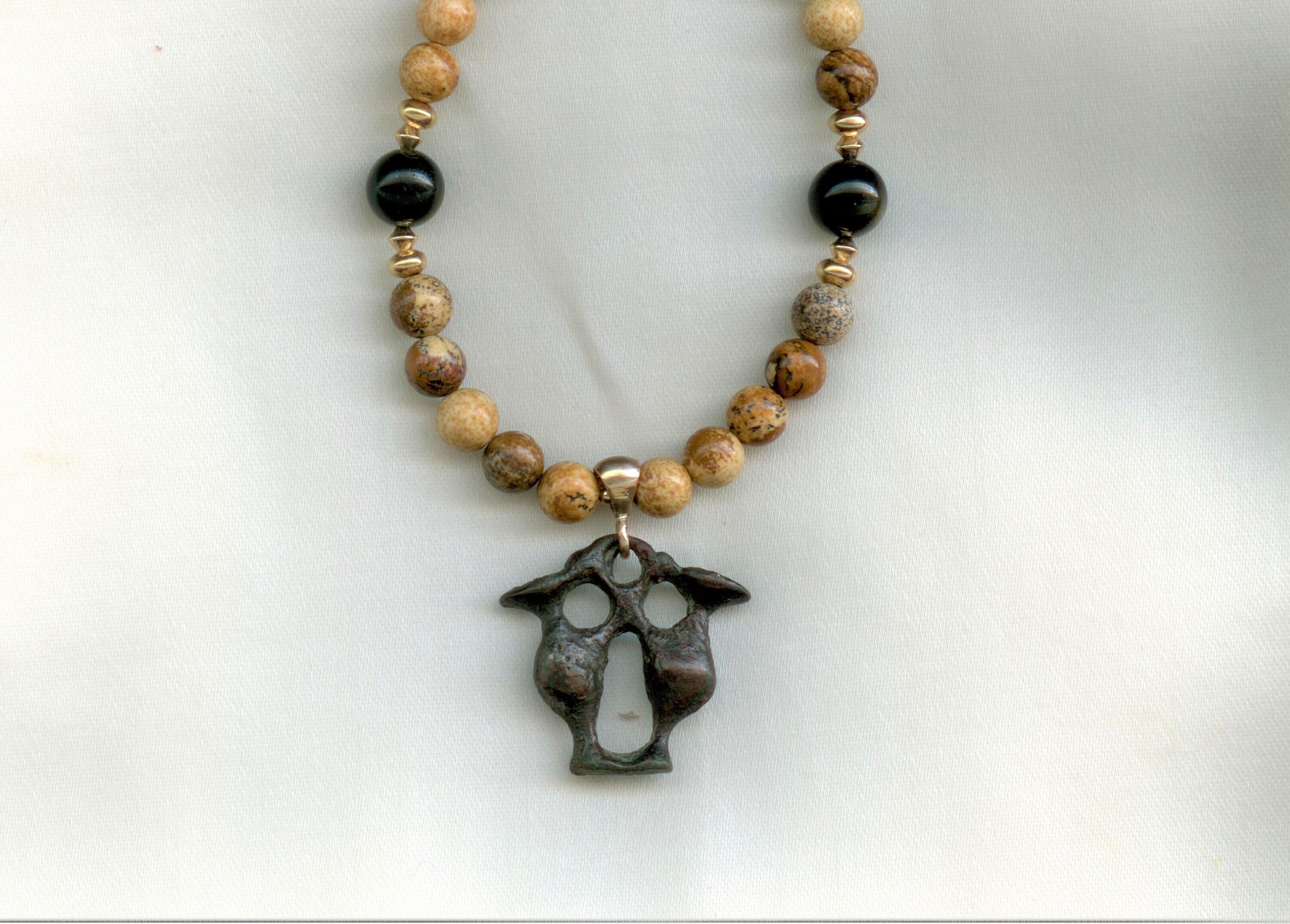
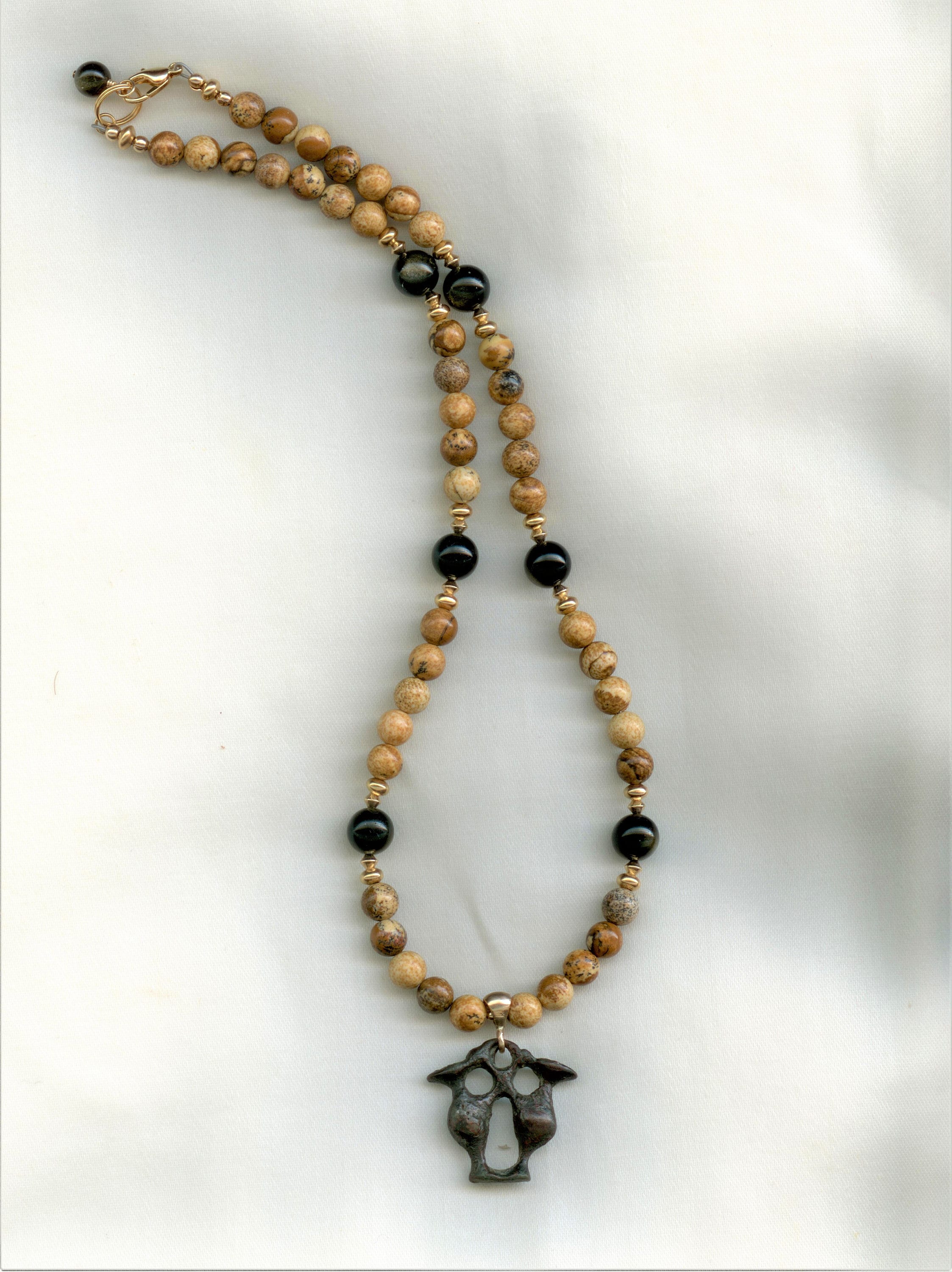
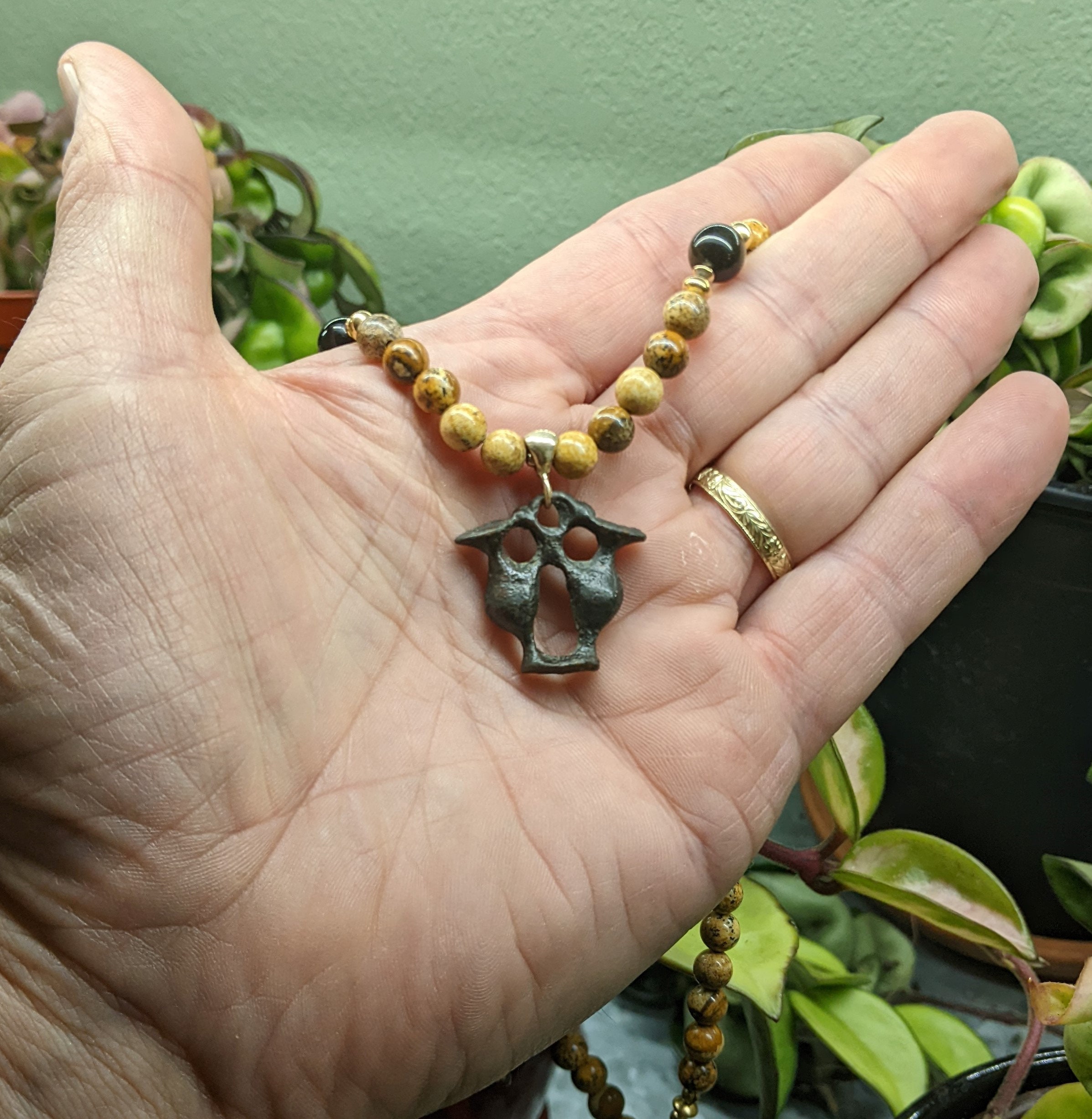
The centerpiece of this necklace is a double jar amulet from the northern part of ancient Tokharistan. It is made of bronze and dates to the 6th century AD. Tokharistan is the name given in the early Middle Ages to the area which was known as Bactria in ancient Greek sources.
Jar amulets were fairly common in early Central and Western Asian cultures. What they signified is unknown. Perhaps abundance, protection or the spiritual associations of water.
Double jar amulets, like this one, are very rare, and may have associations with Manichaeism which was a major Gnostic religion founded by the prophet, Mani (c. 216 -276 AD) in the Sasanian Empire. Manichaeism taught an elaborate dualistic cosmology which depicted the world as the site of a continual struggle between a good, spiritual world of light, and an evil, material world of darkness. Hence two jars. It thrived between the third and seventh centuries AD, and at its height was one of the most widespread religions in the world. It was briefly the main rival, Christianity in the competition to replace classical paganism.
This is a highly collectible piece for anyone interested in the history of religions.
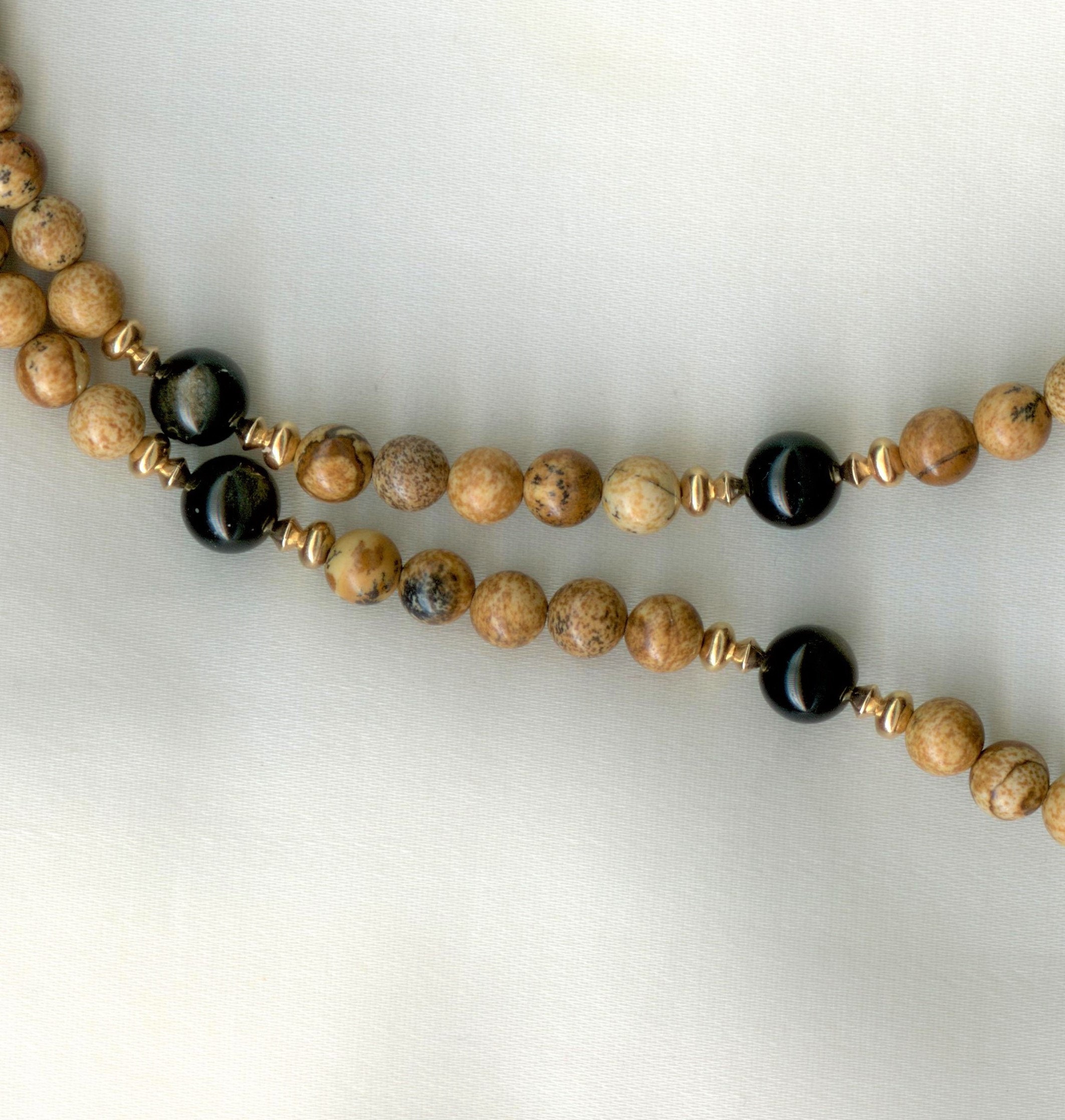
The bail is modern 14 kt gold. Strung with modern picture jasper, gold flash obsidian and gold filled beads. The clasp is PermaGold, a highly durable 24 kt gold plate with a lifetime guarantee against tarnishing.