
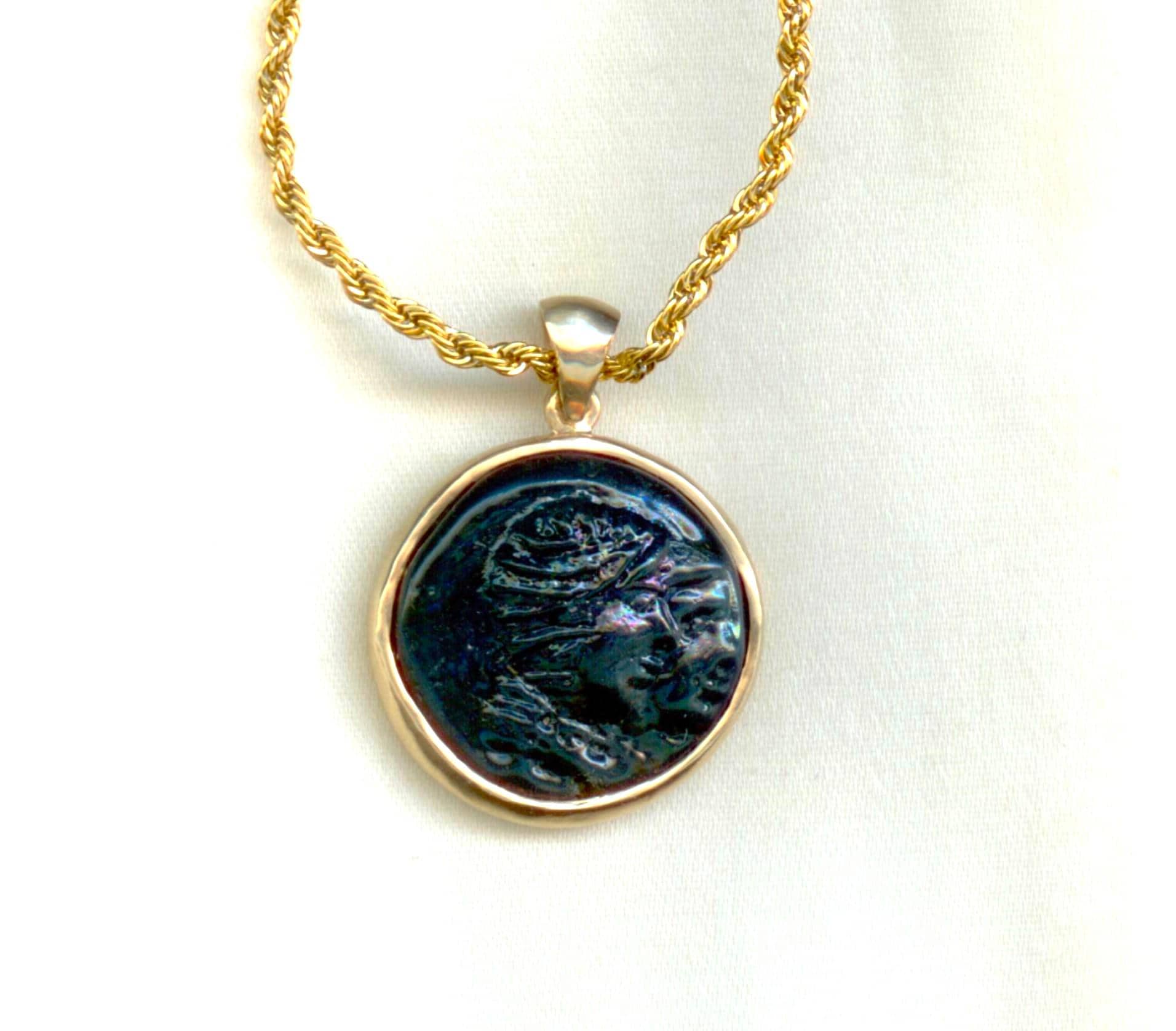
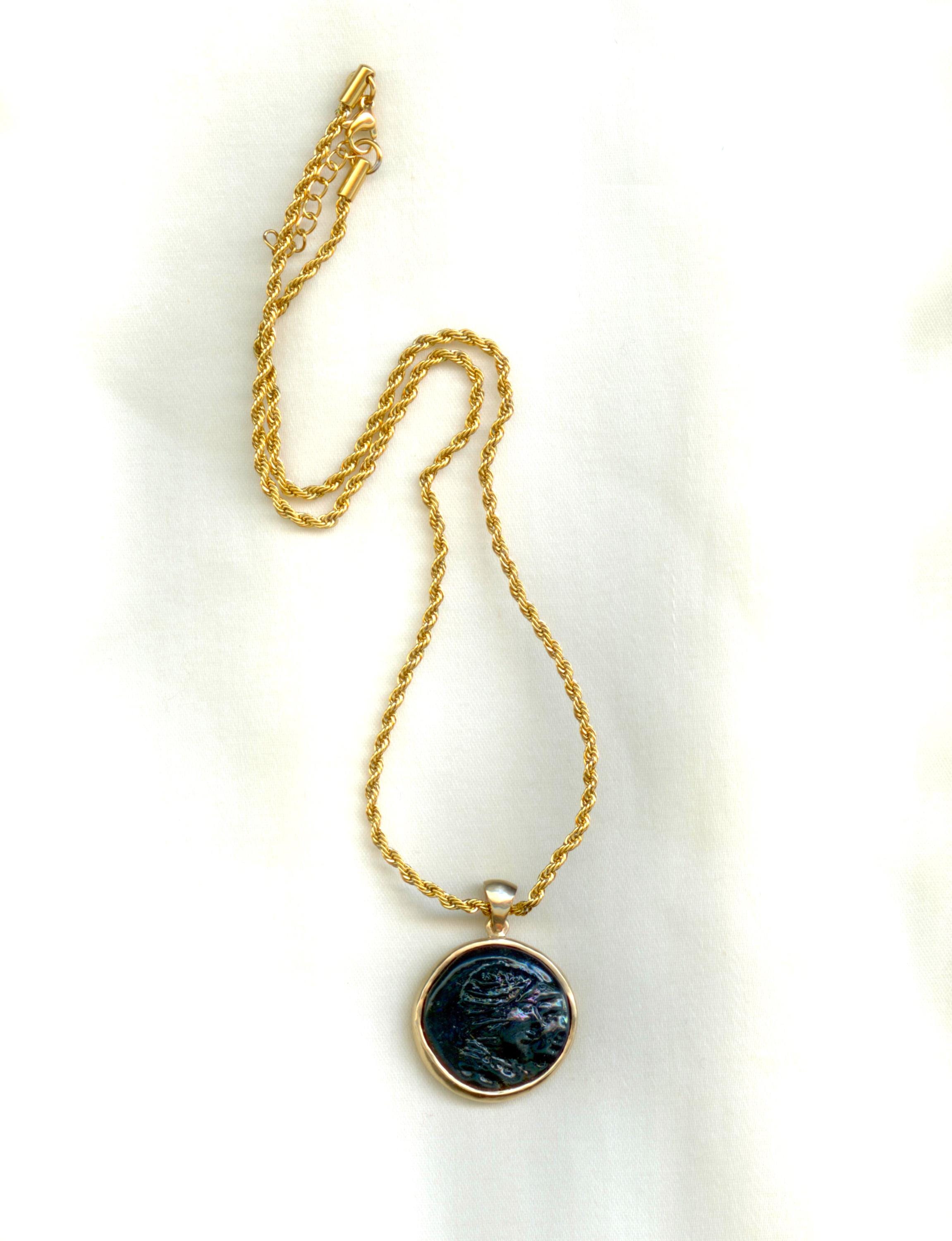
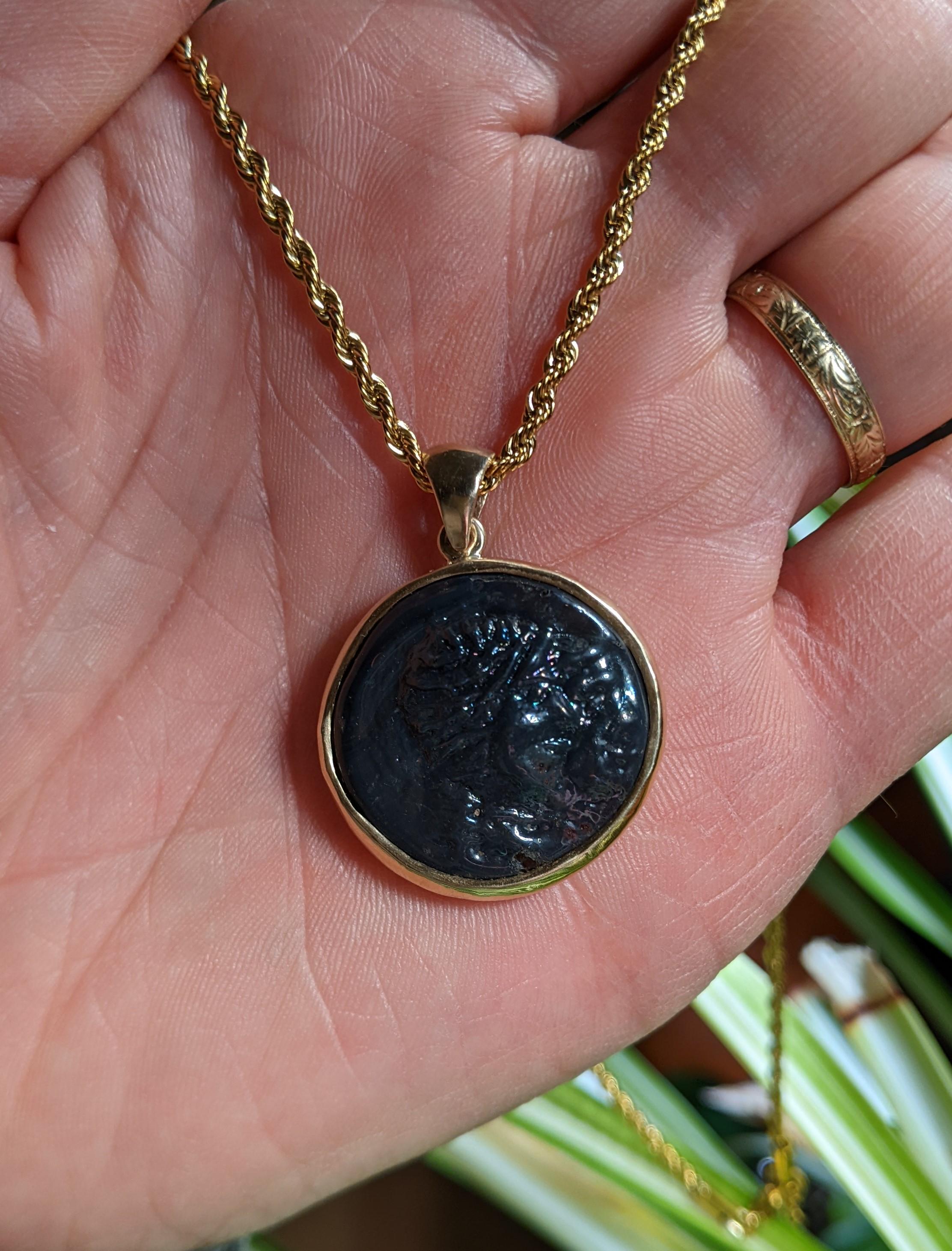
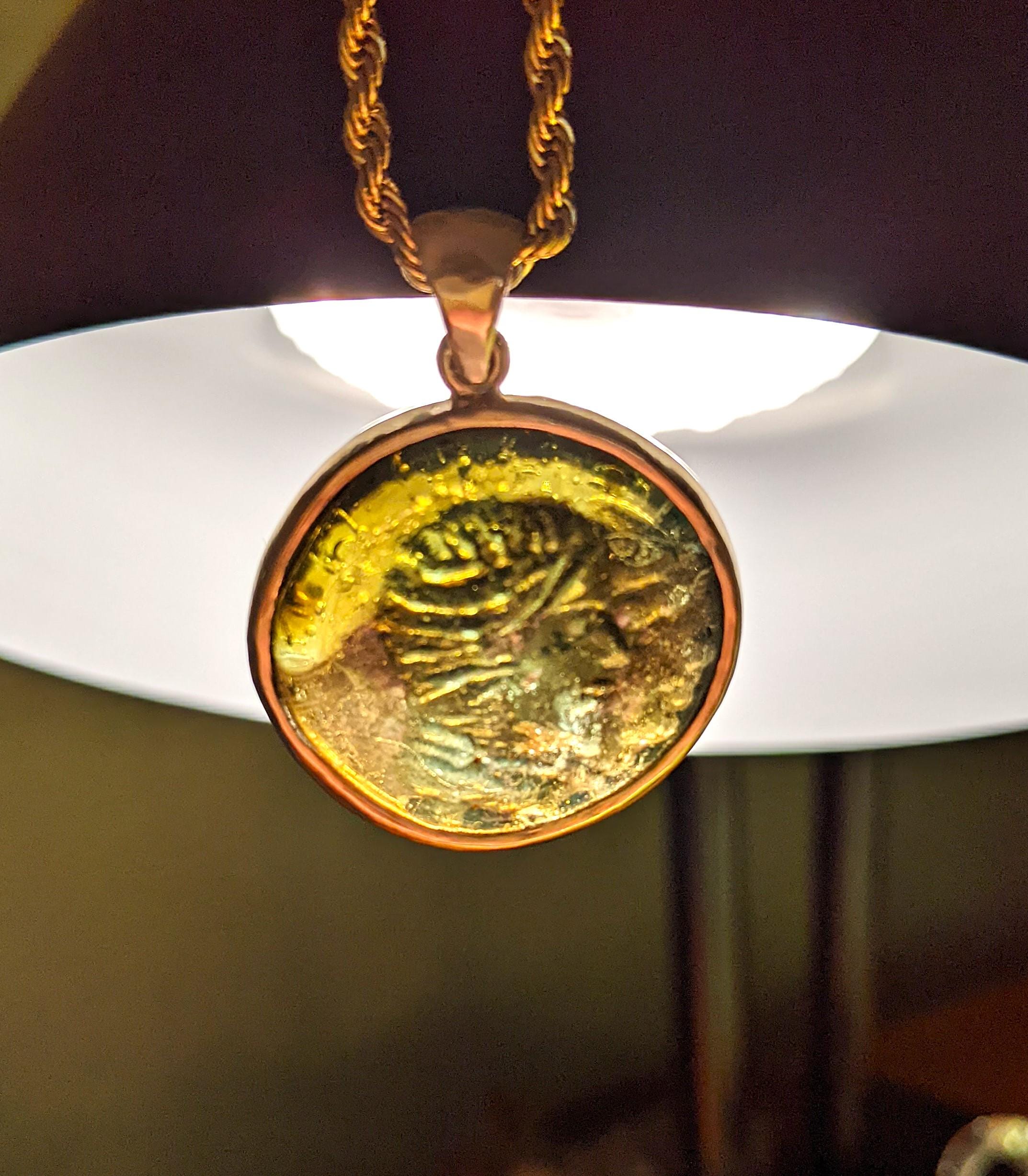
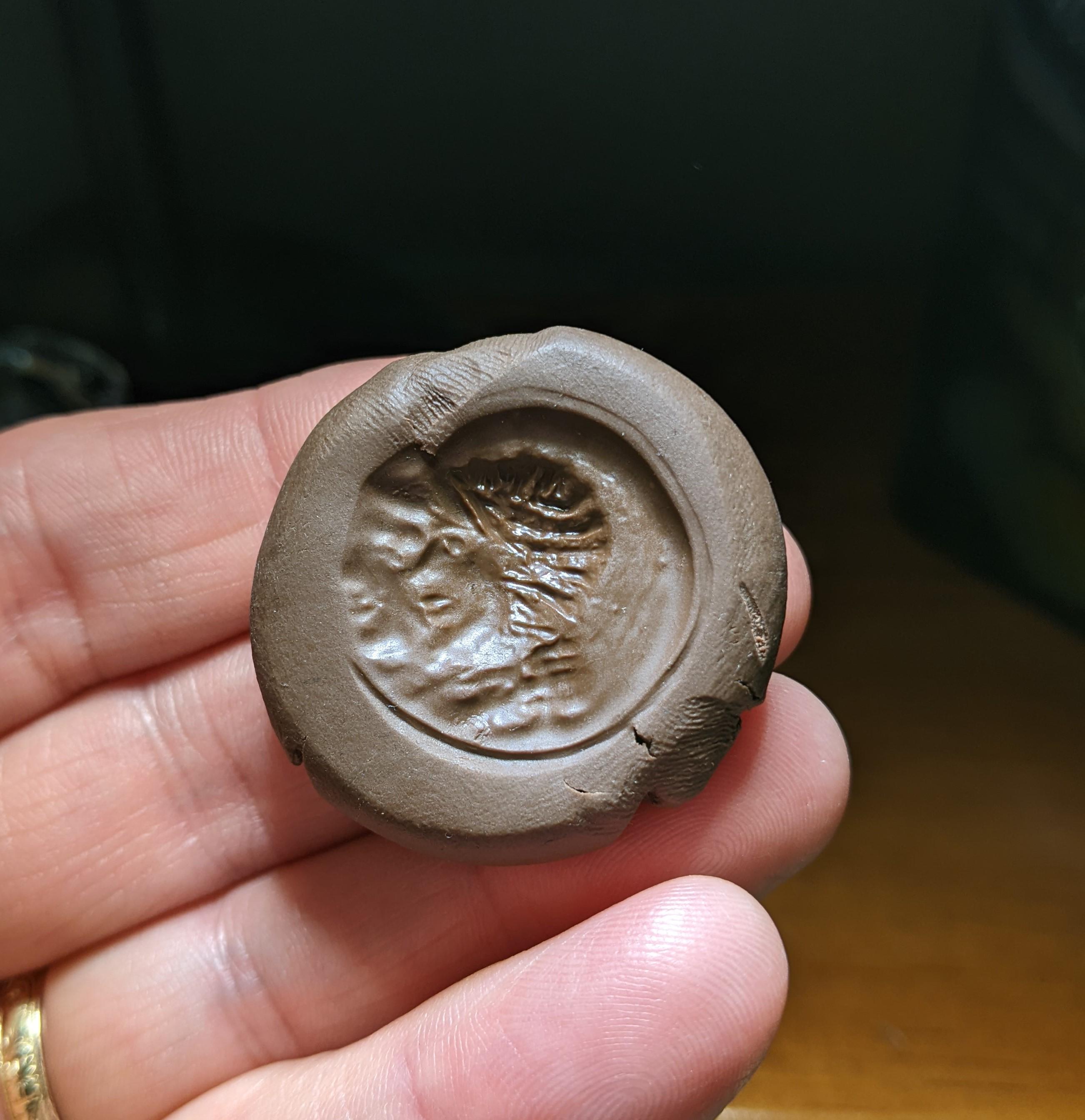
Roman glass coin weight, 1st - 3rd centuries AD. This example has a portraits of Castor & Pollux, figures from Greek and Roman mythology. It was used as a weight to measure the gold aureus coin from the same era.
It is a lovely translucent amber glass with a subtle iridescence. It feels very satisfying to the touch. Rare and wonderful. Museum quality.
Castor and Pollux are twin half-brothers in Greek and Roman mythology. Their mother was Leda, but they had different fathers. Castor was the mortal son of Tyndareus, the king of Sparta, while Pollux was the divine son of Zeus, who seduced Leda in the guise of a swan. Though accounts of their birth are varied, they are sometimes said to have been born from an egg, along with their twin sisters Helen of Troy and Clytemnestra.
In Latin, the twins are also known as the Gemini ("twins") or Castores, as well as the Tyndaridae. Pollux asked Zeus to let him share his own immortality with his twin to keep them together, and they were transformed into the constellation Gemini. The pair were regarded as the patrons of sailors, to whom they appeared as St. Elmo's fire.
Coin weights were used to weigh precious-metal coins in order to assure they were not underweight (It is easy to shave a bit of metal off the edge of a silver or gold coin). Glass was a preferable medium for these weights, since they could be made relatively easily and any chips or alterations were immediately visible to the naked eye. The usage of coin weights, especially glass ones, goes back to Ptolemaic and Byzantine times, and continued into Islamic times and even into the Carolingian Empire.
The setting is 14 kt gold, quite a lot of it. The chain is a gold filled rope chain. Length 18.5", expandable to 19.5".